
Pennsylvania Criminal Court Records Online
Pennsylvania criminal court records are public documents held by the courts across all 67 counties in the Commonwealth. The state's Unified Judicial System gives anyone free access to criminal docket sheets through the UJS Web Portal. You can search by name, case number, or offense tracking number to find cases in any Pennsylvania court. For certified criminal history records, the Pennsylvania State Police PATCH system handles background checks statewide. This guide explains how to find and obtain criminal records in Pennsylvania through the right channels.
Pennsylvania Criminal Court Records Quick Facts
Where to Find Pennsylvania Criminal Court Records
Pennsylvania maintains criminal court records at two main levels. The county Clerk of Courts holds the physical case files for every criminal case tried in that jurisdiction. These files include charging documents, motions, evidence logs, hearing notes, and the final disposition. You can visit the Clerk's office in the county where charges were filed to get copies of documents. Most offices also allow mail requests if you have the case number or the name of the person charged.
The second source is the statewide UJS Web Portal at ujsportal.pacourts.us. This free tool gives public access to criminal docket sheets for Common Pleas courts and Magisterial District courts across all 67 Pennsylvania counties. You can see case status, charges, hearing dates, and case outcomes without going to a courthouse. The portal does not let you download documents, but it gives you enough detail to know what exists. For the actual filings, you still need to contact the county Clerk of Courts.
The official Pennsylvania Courts website serves as the gateway to all these resources. The Pennsylvania Courts official website explains how the system works and links to local court rules and forms for each county.
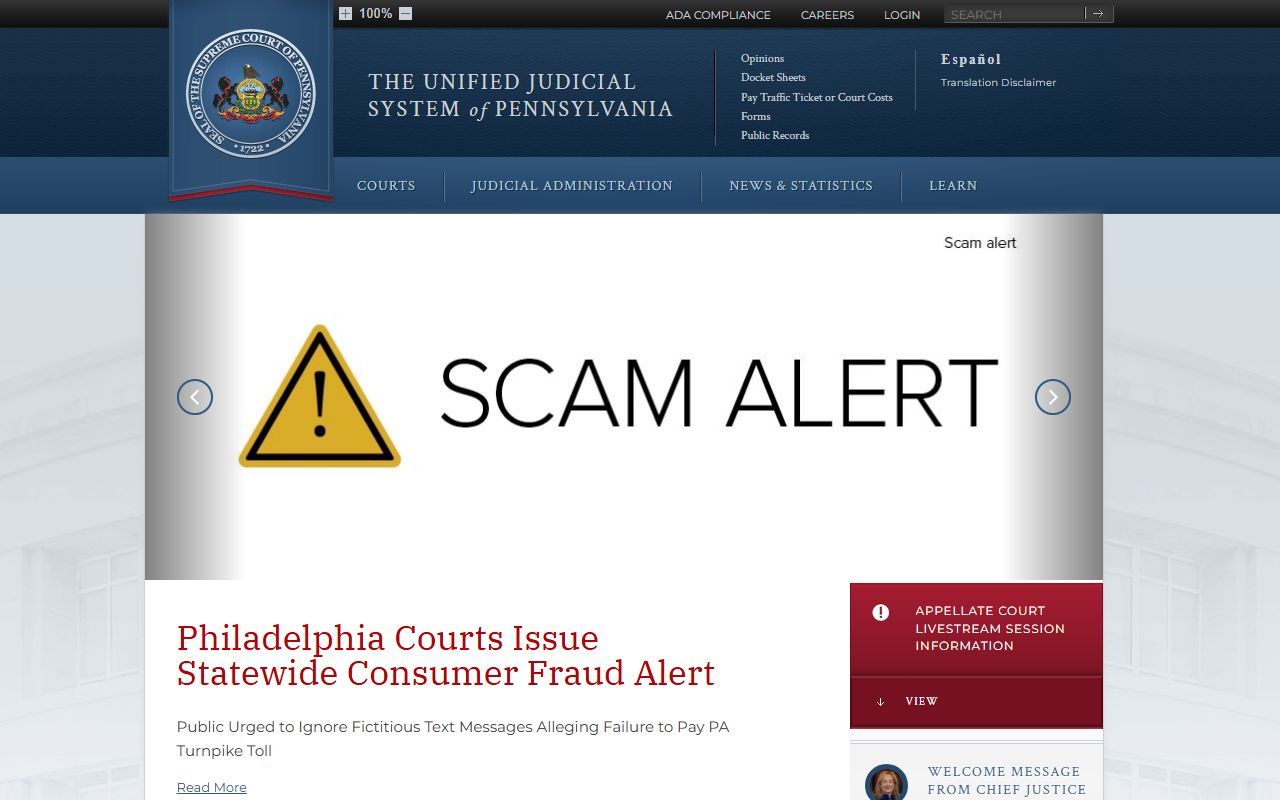
The Pennsylvania Courts site explains how docket sheets work and where to go for documents not available through the online portal.
Note: Docket sheets from the UJS Portal show case activity and filings, but the documents themselves can only be obtained from the county Clerk of Courts where the criminal case was filed.
How to Search Criminal Court Records in Pennsylvania
The UJS Web Portal is the fastest way to search Pennsylvania criminal court records online. Go to ujsportal.pacourts.us and choose the court type you want to search. You can look up cases in the Courts of Common Pleas or in Magisterial District Courts. The search runs across all 67 Pennsylvania counties at once, so you do not have to know which county to start.
The portal lets you search several ways. Enter a full or partial name to find all criminal cases linked to that person in Pennsylvania. If you know the case number, enter it directly. You can also search by OTN (Offense Tracking Number), police incident number, or State ID number. Results show the case type, charges, court dates, presiding judge, and current status. Each result links to the full docket sheet with a complete history of filings and hearings in that Pennsylvania criminal case.
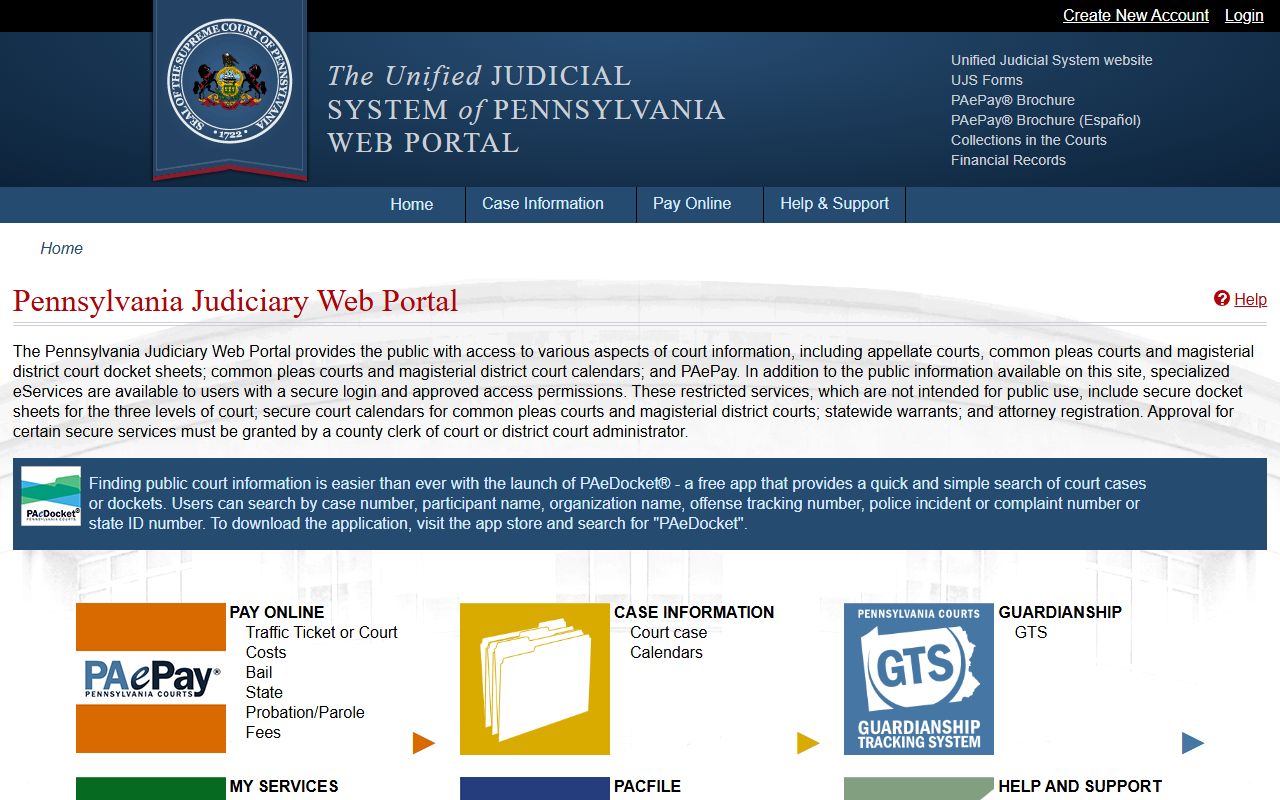
The UJS Portal main search page lets you look up Pennsylvania criminal cases by name, case number, or offense tracking number across all 67 counties at no cost.
The Pennsylvania State Police also offers a mobile app called PAeDocket for Apple and Android devices. The app connects to the same UJS data and lets you search Pennsylvania criminal court dockets from your phone. It is useful for checking case status on the go without logging into a computer.
For cases handled at the Magisterial District level, the same portal covers those as well. Criminal cases in Pennsylvania begin at the Magisterial District Judge (MDJ) level with preliminary arraignments and hearings. If the MDJ finds enough evidence, the case moves to the Court of Common Pleas. Both stages appear in the portal so you can see the full history of a Pennsylvania criminal case from the start.
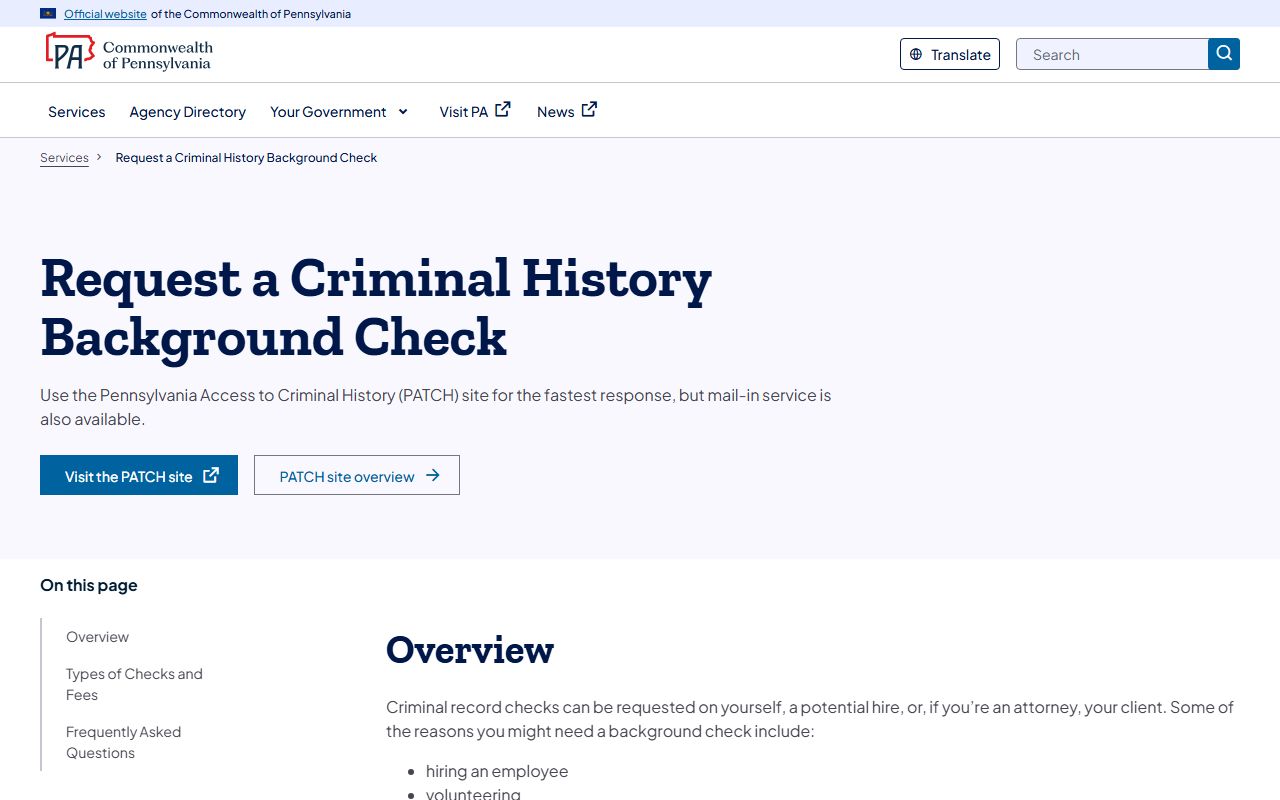
Pennsylvania offers multiple pathways for requesting criminal history information, from online portal searches to formal background check requests through state agencies.
Note: The UJS Portal is a read-only system for the public. Filing documents or submitting records requires using PACFile, the state's electronic filing system for attorneys and self-represented parties in participating Pennsylvania counties.
Pennsylvania PATCH System for Criminal History Checks
The Pennsylvania Access to Criminal History (PATCH) system is the official source for certified criminal background checks in Pennsylvania. The PA State Police Central Repository at 1800 Elmerton Avenue, Harrisburg, PA 17110 maintains PATCH and processes all requests. Standard checks cost $22. Individual access and review of your own record using Form SP4-170 costs $20. Volunteer checks using Form SP4-164A are free. The PATCH helpline is 1-888-QUERYPA (1-888-783-7972), open Monday through Friday, 8 a.m. to 4 p.m.
The PA State Police Criminal History Background Check page explains the full process for submitting requests. Organizations can register as users for monthly billing, and up to ten checks can be submitted per session. Payment online uses credit card. Mail requests require a certified check or money order. Results come back as one of four responses: "Record," "Request Under Review," "No Record," or "No Items Found." Clear checks may come back right away. Cases that need more investigation take two to four weeks.
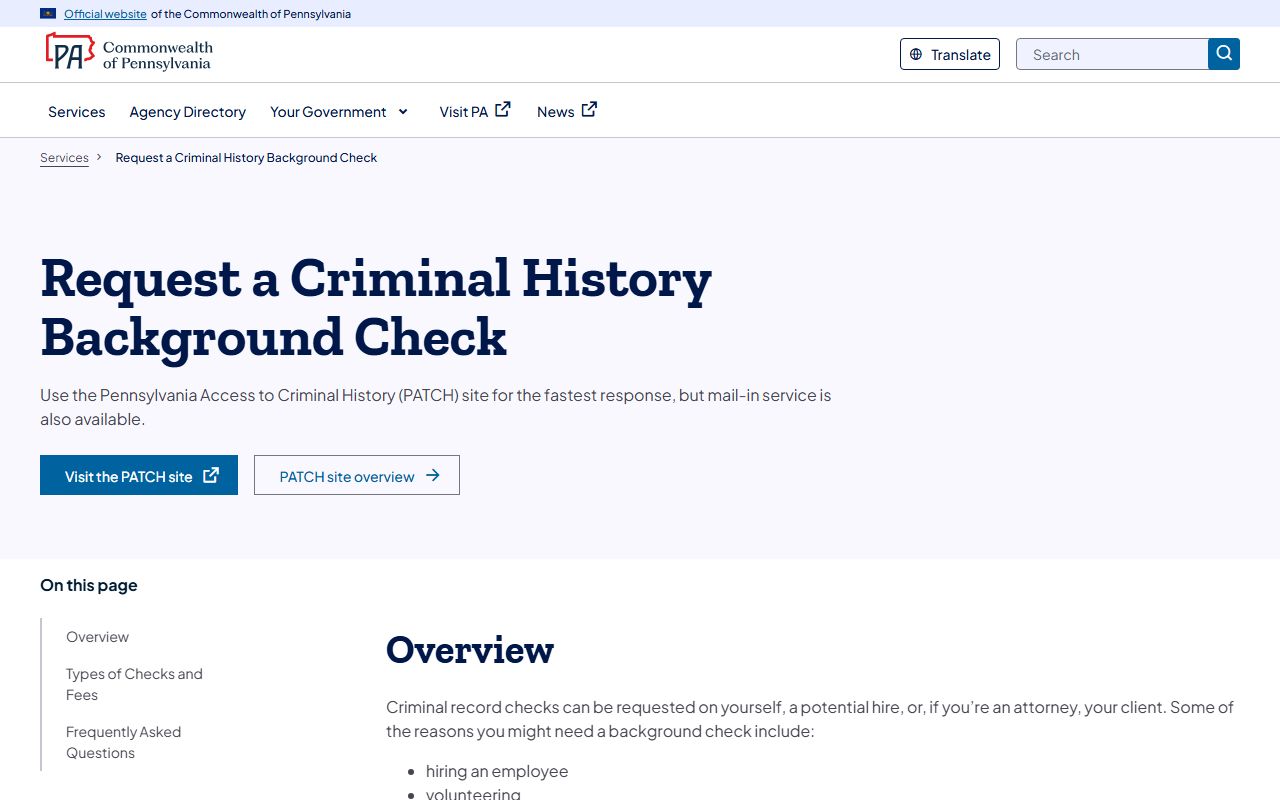
The PA State Police PATCH system processes thousands of Pennsylvania criminal history requests each year, covering arrests, prosecutions, and final dispositions from law enforcement agencies across the state.
You can request a PATCH check through the ePATCH online portal at epatch.pa.gov. The online system is available around the clock and confirms receipt of your request right away. Results include all arrests, prosecutions, and dispositions on file at the PA State Police Central Repository for that individual in Pennsylvania.
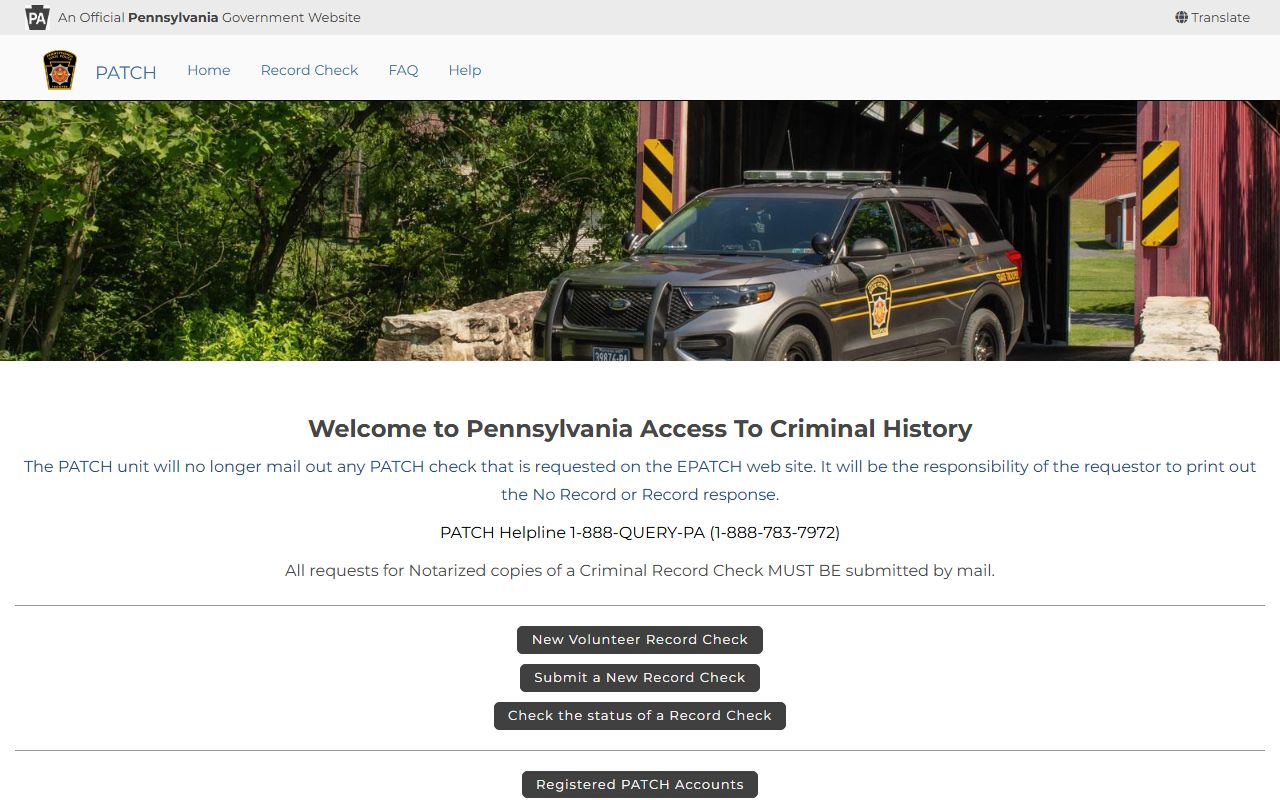
The ePATCH portal at epatch.pa.gov accepts online Pennsylvania criminal history requests 24 hours a day and provides a control number you can use to check the status of your request.
To submit a PATCH request, you need the full name including any nicknames, date of birth, Social Security number, sex and race, a valid photo ID, and the reason for the request. The system pulls records from all Pennsylvania law enforcement agencies and provides a single statewide criminal history report. Organizations that do regular checks can set up accounts for faster processing.
Note: PATCH results reflect only Pennsylvania criminal history records held at the state level and do not include records from other states or federal courts.
Types of Pennsylvania Criminal Court Records
Pennsylvania criminal court records cover a range of documents generated at different stages of a case. The docket sheet is the main public record for any criminal case. It shows every filing, every hearing, the presiding judge, the current status, and the final disposition. Docket sheets are free to view through the UJS Portal for all Pennsylvania courts.
Beyond the docket sheet, full case files at the county Clerk of Courts contain the complete set of documents. These include the criminal complaint, the information or indictment, motions filed by both sides, hearing transcripts, sentencing orders, and any appeals. The level of detail in a case file depends on how far the case went in the Pennsylvania court system. Simple cases have a handful of documents. Complex felony trials may have hundreds of pages on file.
Criminal cases in Pennsylvania move through two court levels. Magisterial District Courts handle the early stages: preliminary arraignments, bail hearings, and preliminary hearings. The Magisterial District Judge System (MDJS) is the statewide case management tool for these courts. If a MDJ finds prima facie evidence, the case transfers to the Court of Common Pleas, where it is tracked in the Common Pleas Case Management System (CPCMS). CPCMS has tracked Pennsylvania criminal cases since 2006 and links dispositions directly to the state criminal history database.
Certified criminal history records from PATCH are a separate product from court dockets. A PATCH result is a compiled report from the PA State Police Central Repository. It covers arrests, charges, and final dispositions statewide. Courts can only provide documents from their own jurisdiction, while PATCH covers all Pennsylvania courts in one report.
Pennsylvania Criminal History Record Information Act
The Criminal History Record Information Act, found at 18 Pa.C.S. § 9101 through § 9183, governs how Pennsylvania collects, stores, and shares criminal history records. CHRIA defines criminal history record information as any data collected by criminal justice agencies about individuals, including arrests, detentions, indictments, prosecutions, dispositions, sentencing, correctional supervision, and release. It sets the rules for who can receive this information and under what conditions.
Under CHRIA, criminal justice agencies in Pennsylvania can share records freely with each other. Non-criminal justice agencies and private individuals must meet specific requirements before they can receive criminal history information. The law requires that all Pennsylvania criminal history records be complete, accurate, and include final dispositions. Records missing final disposition information can create problems for the people named in them, so CHRIA places the duty to update records on the agencies that create them.
CHRIA also gives individuals the right to review their own criminal history and challenge records they believe are inaccurate. You can submit a formal challenge to the PA State Police Central Repository if your record contains errors. The process requires documentation showing the correct information. Pennsylvania courts and law enforcement agencies are required to respond to challenges and correct verified errors in a timely way.
Note: CHRIA governs how Pennsylvania criminal records are shared with non-criminal justice users, but court docket sheets remain public under separate rules set by the Pennsylvania Supreme Court's Public Access Policy.
Clean Slate Law and Record Sealing in Pennsylvania
Pennsylvania's Clean Slate Law, codified at 18 Pa.C.S. § 9122.1 and § 9122.2, provides for automatic sealing of certain criminal records without requiring any action by the individual. Second and third-degree misdemeanors with sentences of less than two years are automatically sealed after seven years if the person has no new convictions during that time. Less serious drug-related felonies with sentences shorter than 30 months are sealed after ten years without a new conviction. The sealing happens through the court system without a petition.
Sealed records remain available to law enforcement and criminal justice agencies in Pennsylvania. They are not visible to the general public through PATCH or the UJS Portal. This means a background check run by a private party would not show sealed records, but a law enforcement agency would still have access. The Clean Slate Law also allows individuals to petition for limited access for other eligible offenses that do not qualify for automatic sealing.
Expungement is a stronger form of relief that results in destruction of the record rather than sealing. ARD (Accelerated Rehabilitative Disposition) completions and certain non-conviction records are eligible for expungement under Pennsylvania law. Once expunged, those records are physically removed from Pennsylvania court and law enforcement systems. Petitions for expungement go through the Court of Common Pleas in the county where the charges were filed.
Public Access Policy and Right-to-Know in Pennsylvania
The Pennsylvania Supreme Court adopted the Public Access Policy under 204 Pa. Code § 213.81 to set uniform standards for electronic access to court records. Under this policy and Rule 509, courts cannot charge fees for viewing records at the courthouse. Public access to Pennsylvania criminal court dockets is free whether you search online through the UJS Portal or view records in person at a courthouse terminal.
The policy also defines what information stays out of public court filings. Filers must keep Social Security numbers, financial account numbers, driver license numbers, State ID numbers, minors' names and dates of birth, and abuse victims' addresses off public documents. This information must go on a separate Confidential Information Form that is not part of the public record. The burden of following these rules falls on the party filing the document in a Pennsylvania criminal case.
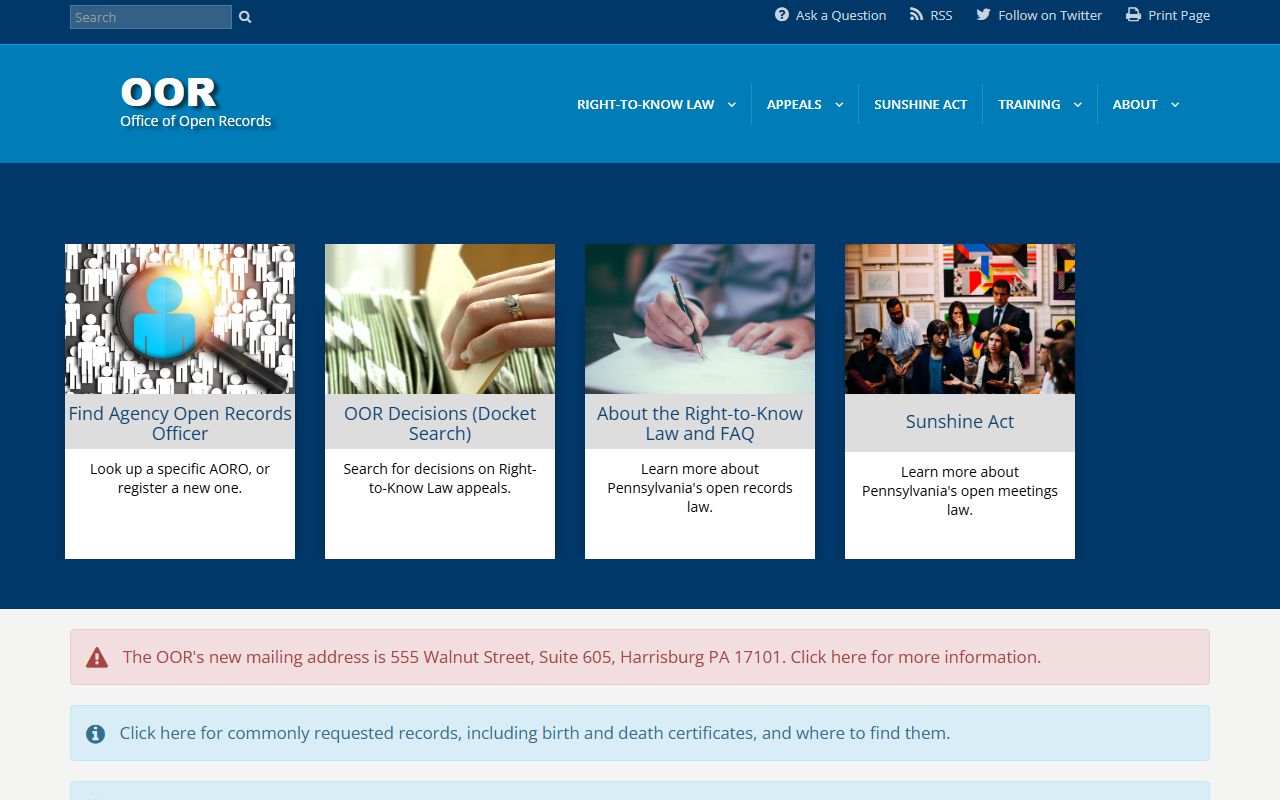
The Pennsylvania Office of Open Records at 333 Market Street, 16th Floor, Harrisburg, handles appeals when agencies deny public records requests under the Right-to-Know Law.
The Pennsylvania Right-to-Know Law, at 65 P.S. § 67.101, effective January 1, 2009, requires all government agencies to designate an open-records officer. Agencies must respond to records requests within five business days. Complex requests may qualify for a 30-day extension. If an agency denies your request, you have 15 business days to file an appeal with the Office of Open Records at 333 Market Street, 16th Floor, Harrisburg, PA 17101. The OOR issues decisions on appeals within 30 days.
Note: Court records in Pennsylvania are governed by the Public Access Policy rather than the Right-to-Know Law, but both frameworks support open access to criminal court information across the state.
Pennsylvania Criminal Court Record Retention
Pennsylvania sets retention schedules for all criminal court records through the Administrative Office of Pennsylvania Courts. Felony criminal case records are kept for 75 years after final disposition. Misdemeanor cases are kept for 25 years. Summary offense records are kept for seven years. Capital cases, meaning those involving the death penalty, are retained permanently.
These schedules apply statewide. Every Court of Common Pleas and Magisterial District Court in Pennsylvania follows the same rules. When a retention period ends, records may be destroyed. This means older misdemeanor cases from decades past may no longer be on file at the county level. If you need a record from a case near the end of its retention period, contact the Clerk of Courts in the county where it was filed as soon as possible.
Expunged records are an exception to standard retention. When a Pennsylvania court orders expungement, the record is destroyed pursuant to that court order rather than held until a standard retention period ends. Once destroyed, the record cannot be recovered. Sealed records under the Clean Slate Law, however, are not destroyed. They remain on file but are restricted from public view.
Philadelphia Criminal Court Records and Local Access
Philadelphia operates its own first judicial district with distinct resources for searching criminal court records. The Philadelphia First Judicial District handles criminal cases through the Court of Common Pleas Criminal Division and the Philadelphia Municipal Court. Cases at both levels appear in the statewide UJS Portal, but Philadelphia also maintains its own local public access system.
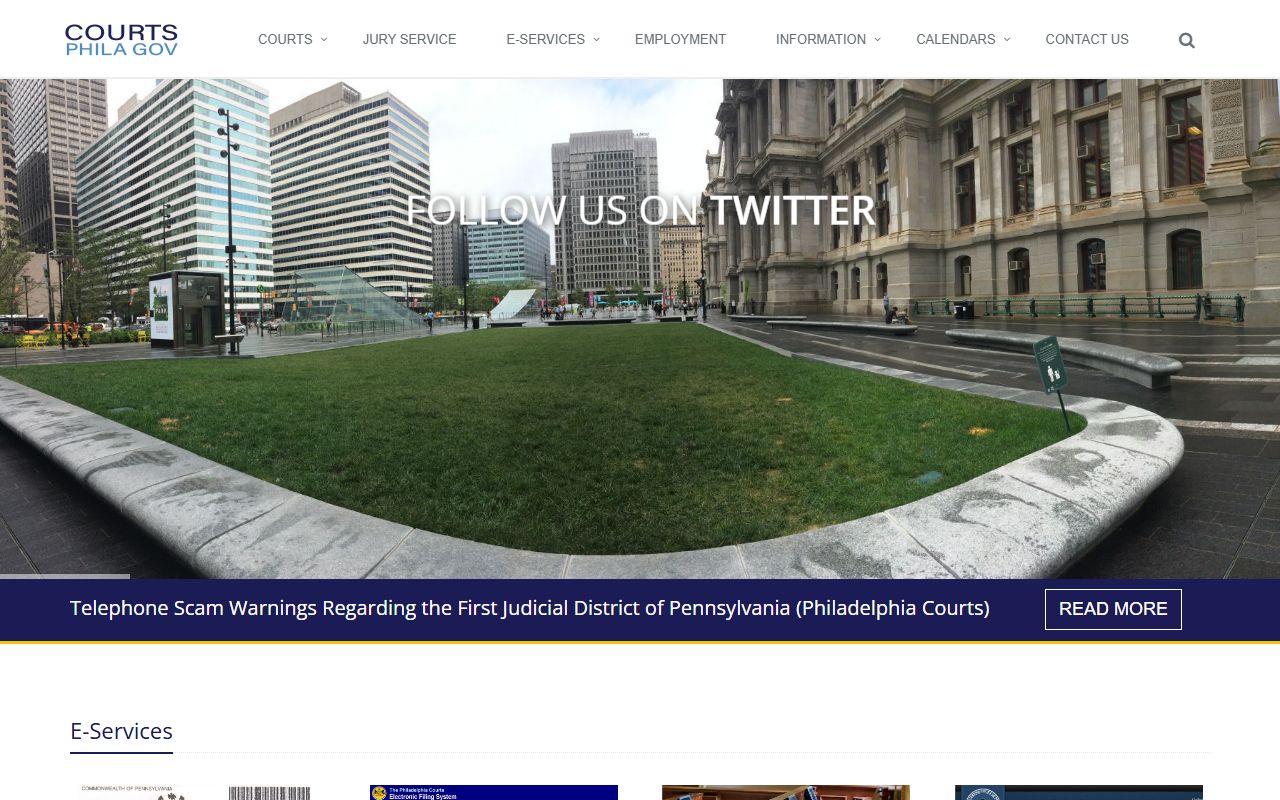
The Philadelphia First Judicial District website provides direct access to Philadelphia criminal court resources alongside the statewide UJS Portal search tools.
Philadelphia's public access portal gives local search options for Philadelphia criminal court dockets. This includes case status, scheduled court dates, and basic charge information for Philadelphia County cases. The portal complements the statewide UJS search for users focused on Philadelphia criminal court records.
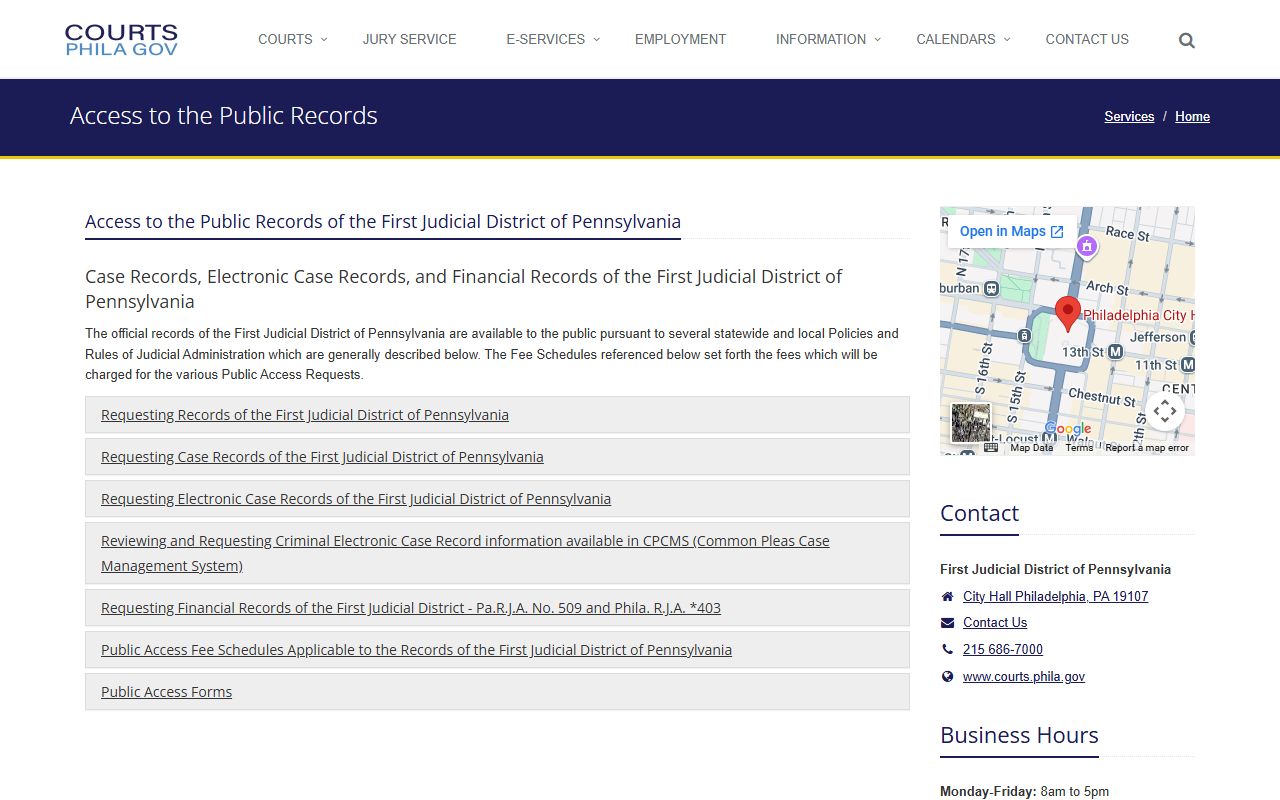
Philadelphia's Public Access Portal is a local tool for searching criminal court records specific to Philadelphia County, complementing the broader statewide UJS Portal search system.
Allegheny County Criminal Court Records
Allegheny County, home to Pittsburgh, has its own court record system alongside the statewide tools. The Allegheny County Clerk of Courts maintains criminal case files for all cases handled in the Allegheny County Court of Common Pleas. You can request copies in person at the courthouse or search online through the Allegheny County District Court Records (DCR) system.
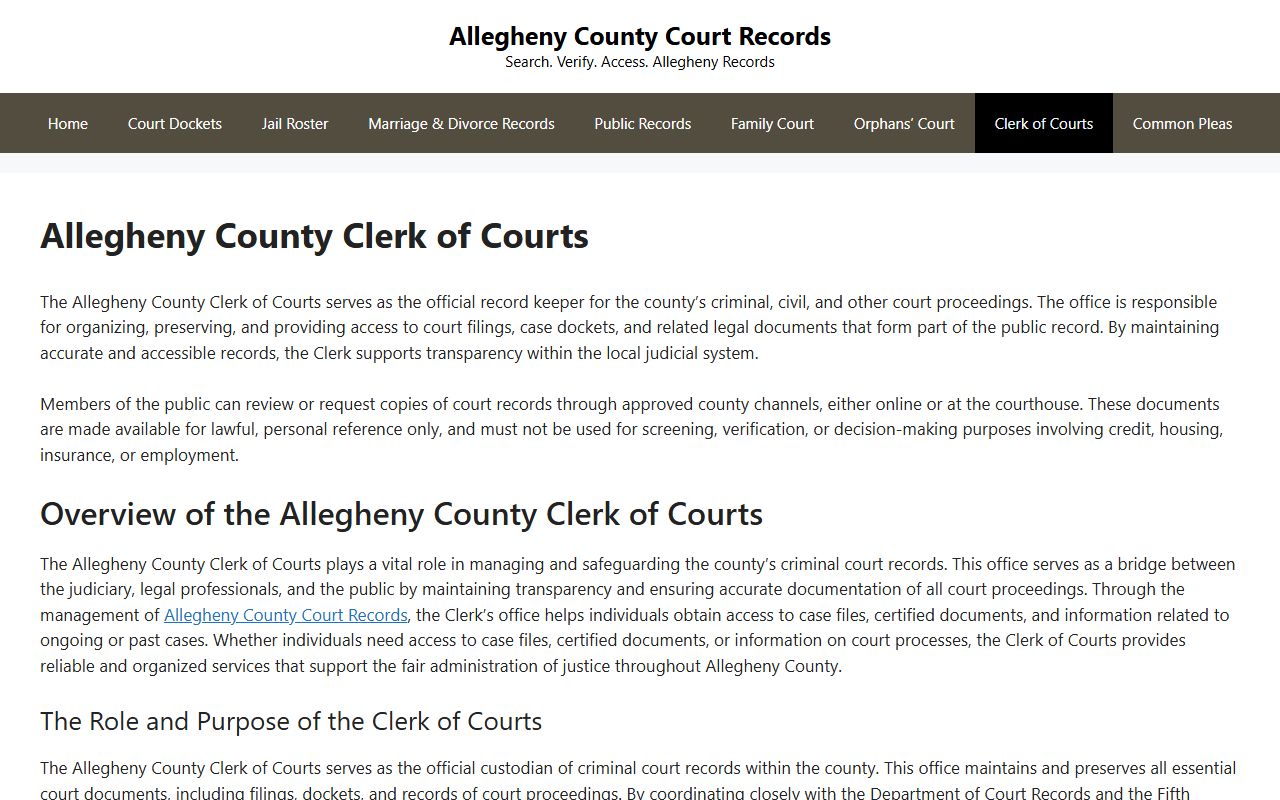
The Allegheny County Clerk of Courts handles criminal case files for all Court of Common Pleas cases in Pittsburgh and Allegheny County, Pennsylvania.
The Allegheny County DCR online system provides case search capabilities for Allegheny County court records. The system covers both civil and criminal matters filed in the county. You can search by name or case number and see filing dates, case type, and current status for Allegheny County criminal cases.
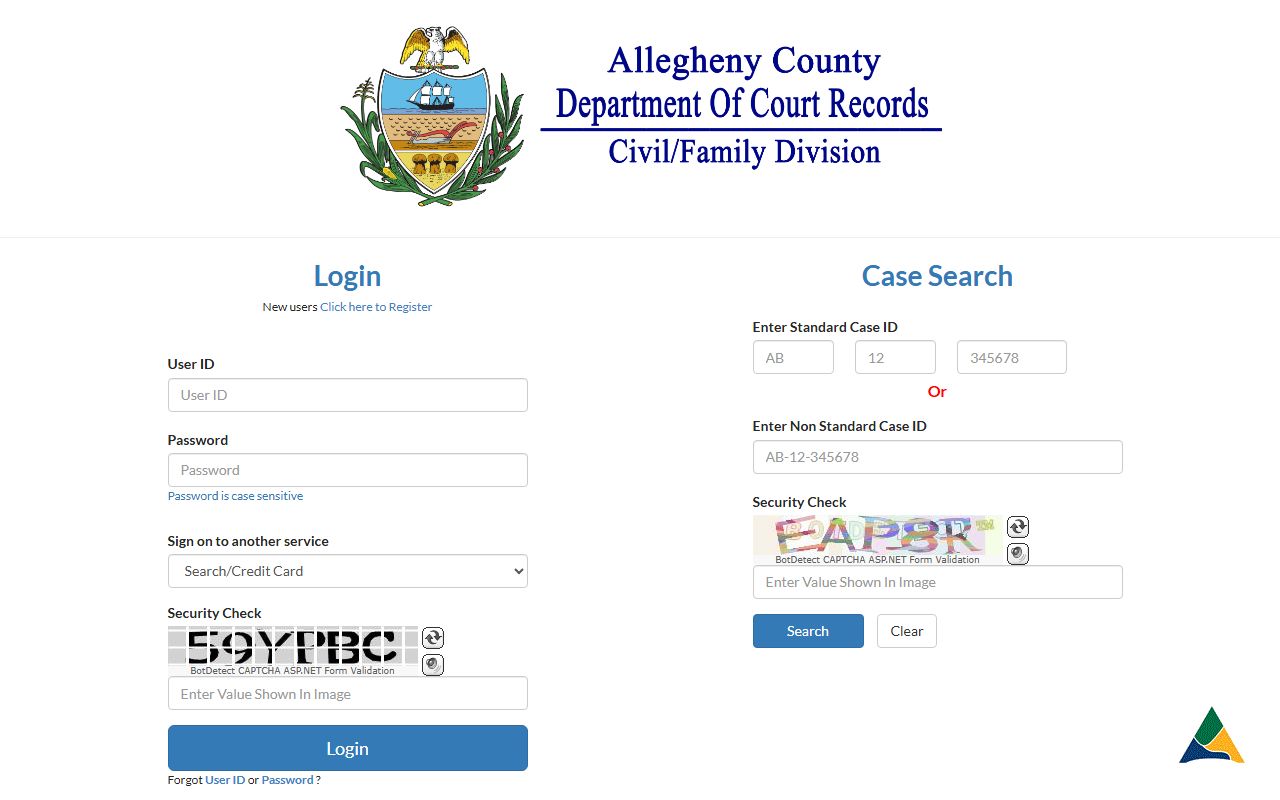
The Allegheny County DCR online system lets you search criminal court records for Pittsburgh-area cases without visiting the courthouse in person.
Allegheny County also offers electronic filing through the court system. The Allegheny County e-filing tutorials walk attorneys and self-represented parties through the process of submitting documents electronically in Allegheny County criminal cases.
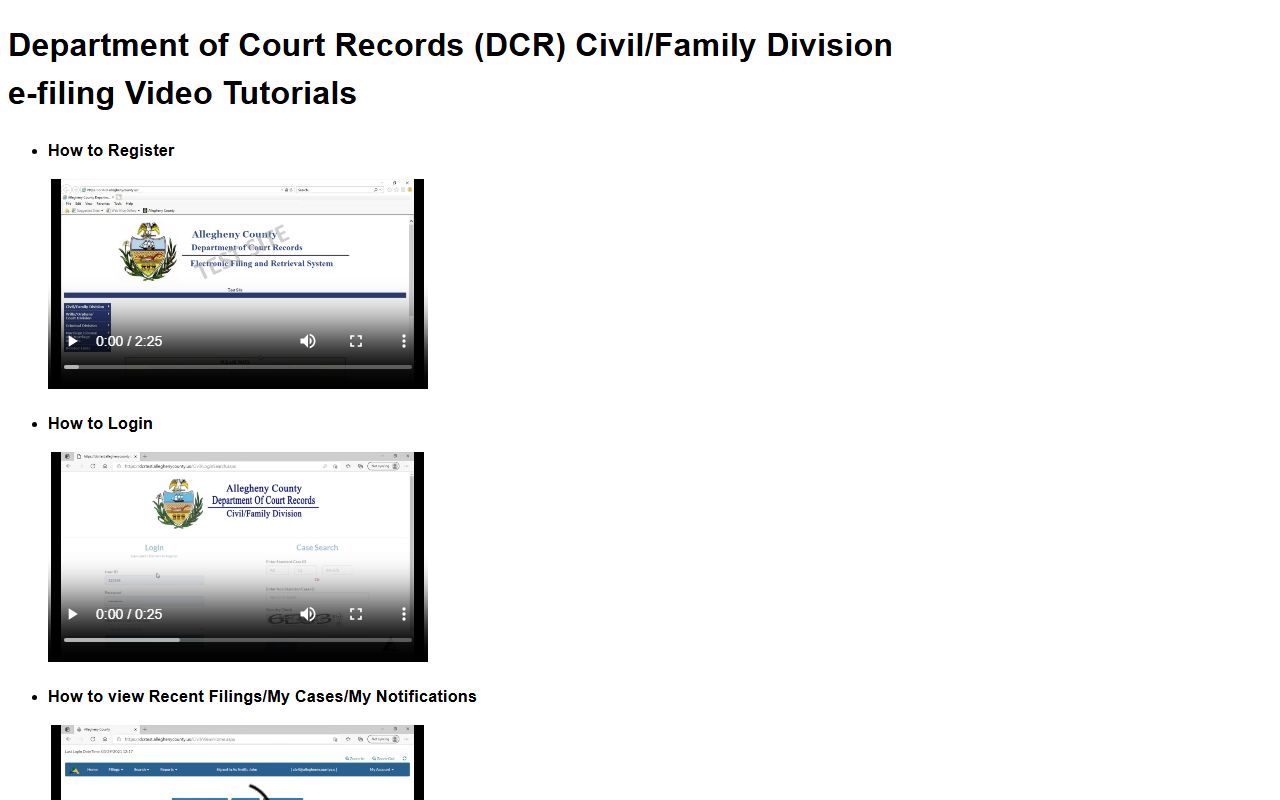
Allegheny County provides video tutorials to guide users through the electronic filing process for criminal court documents in the county system.
Other Pennsylvania Counties and Courts
Beyond Philadelphia and Allegheny, other Pennsylvania counties have their own court resources alongside the statewide UJS Portal. Delaware County provides inmate information through the Delaware County Sheriff inmate lookup portal, which helps identify individuals currently in custody and links to broader court record searches for Delaware County criminal cases.
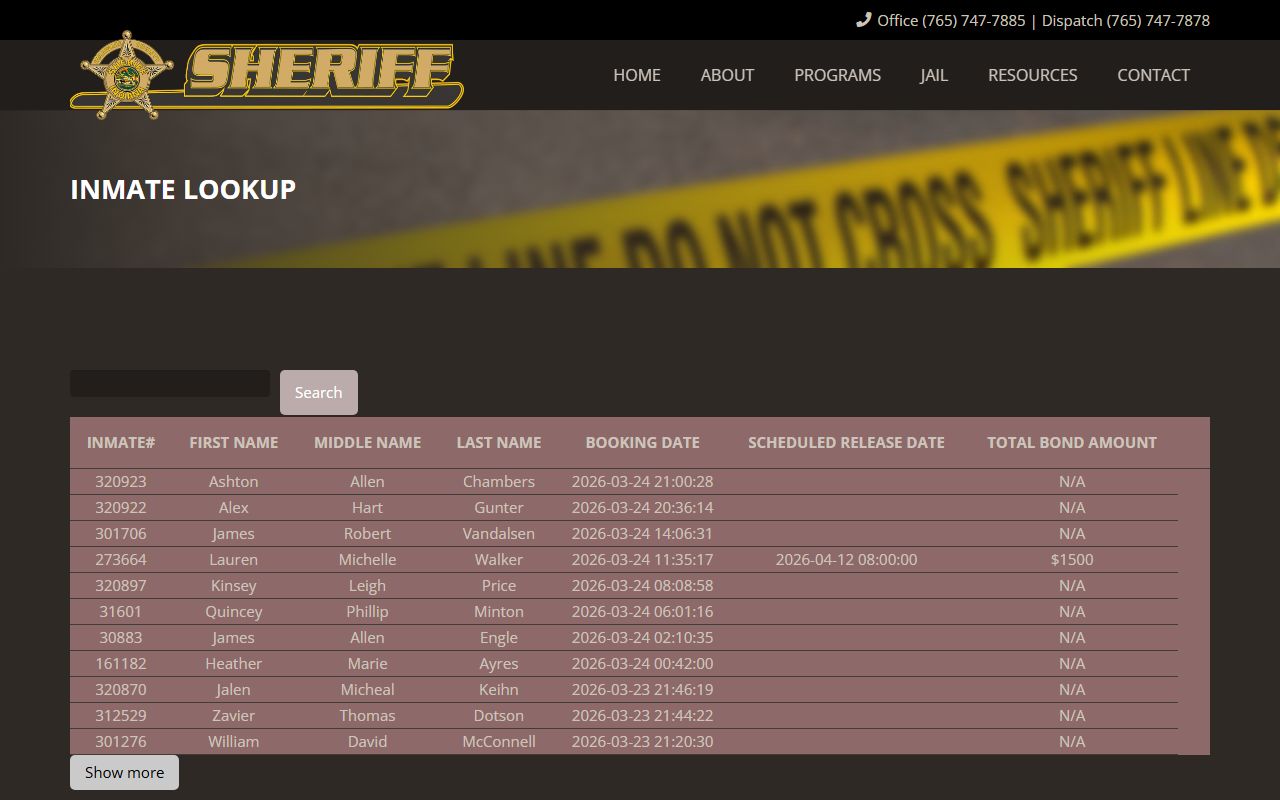
The Delaware County Sheriff's inmate lookup tool helps track custody status for individuals with pending or recent criminal cases in Delaware County, Pennsylvania.
In Scranton and Lackawanna County, the city of Scranton provides a Right-to-Know request portal for public records. This covers government documents including records related to criminal matters handled by local agencies. Requests go to the city's open-records officer and follow the same five-business-day response timeline required under Pennsylvania's Right-to-Know Law.
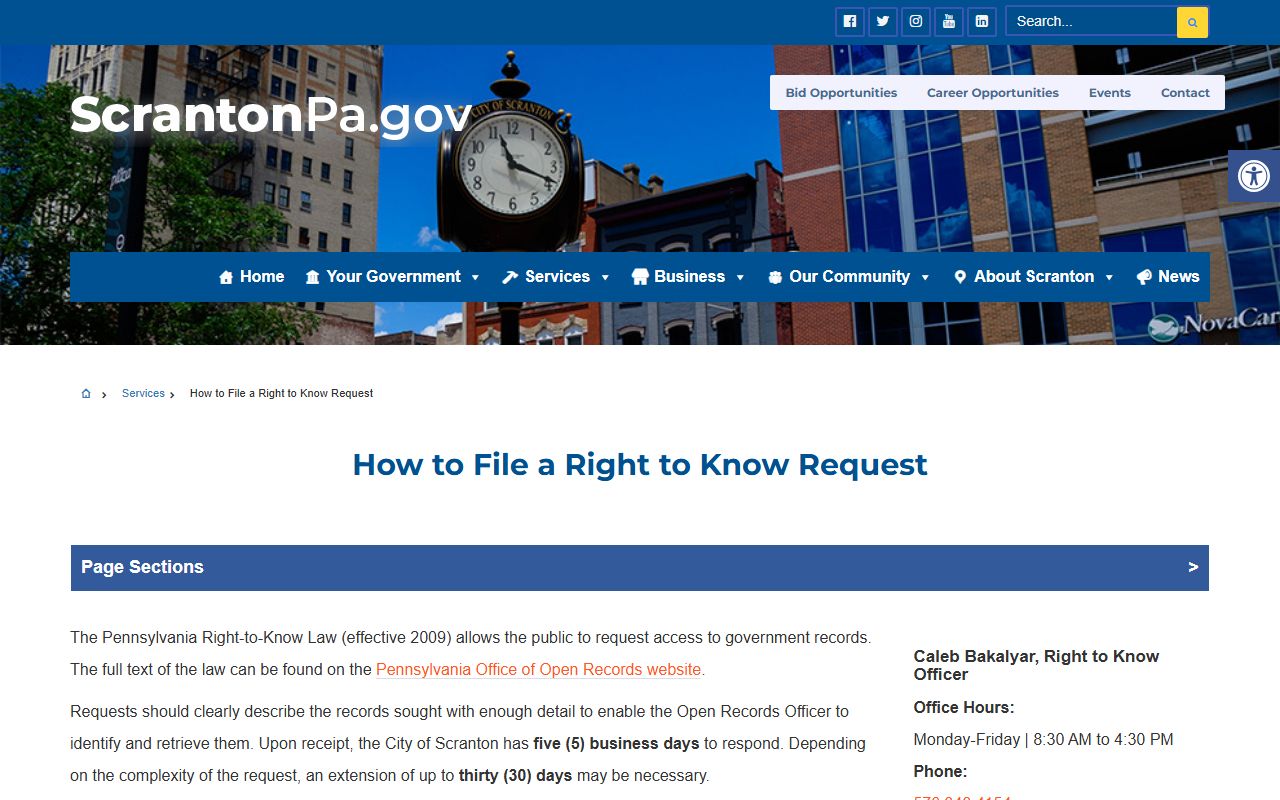
Scranton's Right-to-Know portal lets residents submit formal records requests to the city, including those related to criminal matters handled by Scranton and Lackawanna County agencies.
Every one of Pennsylvania's 67 counties follows the same statewide framework for criminal court records. The UJS Portal covers all of them. County Clerks hold the physical files. PATCH provides the statewide criminal history. The PA Office of Open Records handles appeals. These tools work together across the entire Commonwealth.
Browse Pennsylvania Criminal Court Records by County
Each of Pennsylvania's 67 counties has its own Court of Common Pleas and Clerk of Courts office that maintains local criminal case files. Select a county below to find resources, contact information, and search tools for criminal court records in that area.
Criminal Court Records in Major Pennsylvania Cities
Residents in large Pennsylvania cities file criminal cases at their county courthouse. Select a city below to find local court resources and search tools for criminal court records in that area.